
The New Reality of Multi-Generational Living
If you’ve noticed more families choosing to live together grandparents, parents, and kids all under one roof you’re not imagining it. Rising travel costs, the desire for built-in childcare support, and the simple comfort of staying close to loved ones have made multi-generational homes more common than they were a decade ago. Census data across several countries, including India and the US, has repeatedly pointed to this shift, and homebuilders have taken notice.
But here’s the catch nobody talks about enough: most homes weren’t designed for three generations to move through comfortably. Staircases that felt fine for a single working couple suddenly become daily obstacles when a grandparent joins the household, or when a family returns from a long international flight dragging suitcases up two flights of stairs at midnight.
This is exactly where a home elevator for multi-story homes stops being a luxury add-on and starts being a practical, almost obvious, solution.
Why Traveling Families Feel the Difference the Most
Think about the last time you came home from a trip. You’re tired, your legs feel heavy from hours of sitting, your bags weigh more than they did when you packed them, and the last thing you want is to climb stairs to reach your bedroom.
Now multiply that experience across a household where:
- Grandparents may have joint pain or reduced stamina after a flight
- Parents are juggling luggage, a sleepy toddler, and jet lag
- Kids are half-asleep and need to be carried up
- Everyone just wants to collapse into bed, not navigate a staircase
Families who travel frequently — whether for work, vacations, or visiting relatives abroad — feel stair fatigue more acutely and more often than families who rarely leave home. A home elevator turns that stressful final stretch of a long trip into a smooth, thirty-second ride.
It’s a small shift in daily life, but for a family constantly in motion, it adds up to a noticeably calmer home.
What Makes a Home Elevator Different From What You Imagine
A lot of homeowners still picture commercial building elevators — bulky, industrial, requiring a dedicated machine room and months of construction. That image is outdated.
Modern home elevators built for residential use are:
Compact by design. Many models fit into a footprint as small as a large closet, making them realistic for homes that weren’t originally planned with an elevator shaft.
Quiet and low-maintenance. Unlike older hydraulic systems, newer elevators run smoothly with minimal noise, so they don’t disrupt sleeping schedules — important when jet-lagged travelers are trying to reset their internal clock.
Energy-conscious. Many home elevator models today are built to consume less power than a few household appliances running simultaneously, which matters for families conscious of running costs.
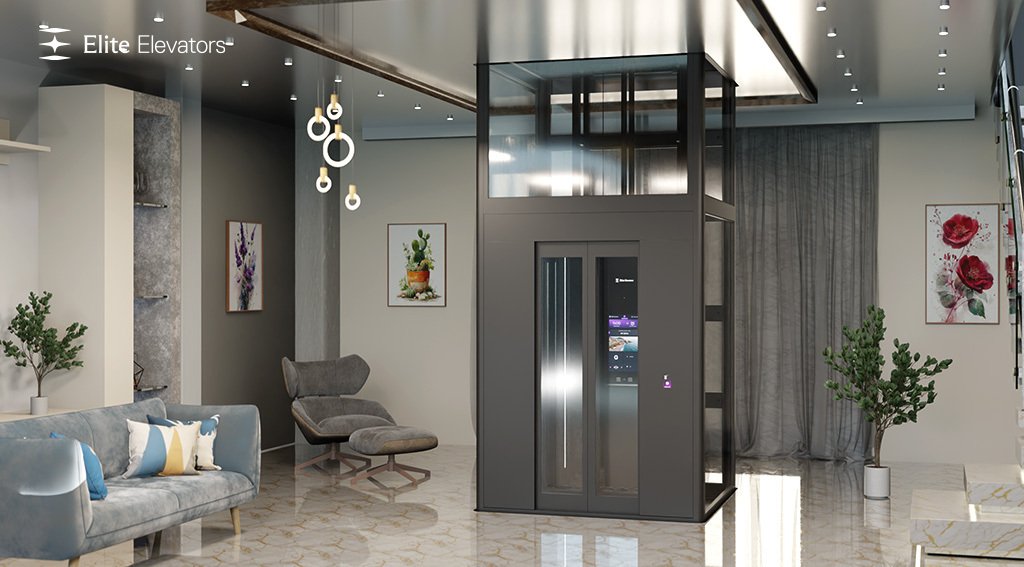
Aesthetically flexible. Glass cabins, wood-panel interiors, brushed metal finishes — a home elevator for multi-story homes can be designed to match your interior rather than looking like it was bolted on as an afterthought.
The Real Benefits for a Multi-Generational, Travel-Loving Household
1. Independence for Grandparents
One of the biggest quiet worries adult children carry is watching a parent struggle with stairs. A home elevator gives grandparents the ability to move between floors independently — no need to call out for help, no fear of a fall on the way down for morning tea. This independence often improves not just physical comfort but emotional wellbeing too, since nobody wants to feel like a burden in their own home.
2. Safer Travel Days
Moving day, or even just returning from a trip, involves suitcases, duty-free bags, sometimes a stroller, and tired kids. Carrying all of that up a staircase is when accidents typically happen — a missed step, a dropped bag, a strained back. An elevator removes that entire risk category from your homecoming routine.
3. Built-In Flexibility as Family Needs Change
Families evolve. A newborn arrives, a grandparent’s mobility changes, someone recovers from a minor surgery after a trip abroad. A home elevator quietly adapts to all of these life stages without requiring a home redesign each time. It’s one installation that serves the household for decades, regardless of who’s living there or what stage of life they’re in.
4. Higher Property Value
Beyond daily convenience, real estate professionals increasingly note that homes with elevators appeal to a wider buyer pool — particularly multi-generational buyers themselves. If you ever decide to sell, a well-installed home elevator can be a genuine differentiator in the listing, not just a quirky feature.
5. A Smoother Daily Rhythm for Everyone
It’s easy to underestimate how much friction stairs add to a busy household. Multiply small daily annoyances — carrying laundry, moving furniture, helping a toddler up and down — across years, and an elevator starts to look less like indulgence and more like time and energy saved every single day.
Choosing the Right Home Elevator for a Multi-Story Home
Not every elevator suits every household. Here’s what families should actually think about before installing one.
Space Availability
Before anything else, assess how much floor space you can realistically dedicate. Home elevators are known for needing a smaller footprint than traditional cable-driven systems, which makes them popular for retrofits in homes that weren’t originally built with an elevator shaft.
Number of Floors and Usage Frequency
A family living across two floors with occasional elevator use has very different requirements than a household spanning three or four floors with grandparents using it multiple times a day. Usage frequency affects the type of drive system, motor capacity, and maintenance schedule you should plan for.
Load Capacity
Multi-generational homes need to think beyond just people. Will the elevator regularly carry luggage, a wheelchair, a walker, or groceries? Load capacity should be chosen with the heaviest realistic use case in mind, not just the lightest.
Safety Features
Look for elevators with battery backup (critical during power outages, which matters more in areas prone to them), emergency alarms, auto-rescue devices, and sensor-based door safety. For households with elderly members or young children, these aren’t optional extras — they’re the baseline.
Design That Fits the Home
Since the elevator will likely be one of the most visible fixtures in a multi-story home, its finish matters. Glass-panel cabins suit modern homes, while wood-paneled interiors tend to blend better into traditional or classic interiors. A good installer will walk you through options rather than offering a single standard look.
After-Sales Support
This is where many homeowners get caught off guard. An elevator is a long-term mechanical investment, and its real value depends heavily on ongoing maintenance, prompt servicing, and genuine spare-part availability — not just the installation itself.
Common Concerns Families Have (And the Honest Answers)
“Isn’t this just for older people?” Not really. Yes, it helps grandparents, but it equally helps parents carrying kids and luggage, and it future-proofs the home for whoever lives there next — including you, twenty years from now.
“Will installation destroy our home’s structure?” Not with the right system. Pneumatic and certain cable-driven elevators are specifically engineered for retrofitting, meaning installation teams work around your home’s existing structure rather than demolishing it.
“What about power cuts?” Reputable home elevator systems include battery backup that lets the elevator complete its current movement or descend safely to the nearest floor during an outage — an important detail for families in regions with inconsistent power supply.
“Is it noisy?” Older hydraulic systems could be. Modern pneumatic and traction-based residential elevators are engineered to run quietly enough that they won’t disturb sleep, even for jet-lagged family members trying to adjust their body clock after a long flight.
“How long does installation actually take?” This varies by system and home layout, but many modern residential elevators — particularly pneumatic models — are installed considerably faster than traditional construction-heavy elevators, since they avoid extensive pit and shaft work.
A Day in the Life: How a Home Elevator Changes the Routine
Picture this. It’s 11 p.m., and your family has just landed after an international flight. Grandma’s knees are aching from sitting too long, your youngest is asleep on your shoulder, and there are four suitcases waiting to go up two floors.
Without an elevator: someone carries the sleeping child up first, comes back down for bags, helps grandma up slowly holding the railing, and by the time everyone settles in, it’s nearly midnight, and everyone’s exhausted before they even reach bed.
With a home elevator: everyone — luggage included — rides up together in under a minute. Grandma doesn’t strain her knees, the child stays asleep, and the family is settled in fifteen minutes instead of forty-five.
That’s the entire case for a home elevator for multi-story homes, distilled into one ordinary evening that happens more often than most families realize.
Planning Ahead: Why It’s Smarter to Install Early
Many families wait until mobility becomes a visible problem before considering an elevator — usually after a fall, an injury, or a parent’s health decline. But elevators installed proactively tend to be:
- Less rushed and better planned, since there’s no urgent health need dictating a fast timeline
- More cost-effective, because homeowners can compare options and choose thoughtfully rather than reactively
- Better integrated into the home’s design, since interiors and finishes can be planned together
If your family already travels often, already has multiple generations under one roof, or is planning a home renovation, that planning stage is the ideal moment to factor in an elevator rather than treating it as a future add-on.
Making the Decision as a Family
A home elevator isn’t just a mechanical purchase — it’s a decision that affects daily life for everyone in the house, from the youngest grandchild to the eldest grandparent. It’s worth having an honest conversation as a family about:
- How often each generation currently struggles with stairs
- Whether frequent travel adds extra strain (heavy bags, late arrivals, jet lag)
- Long-term plans — are you staying in this home for decades, or is resale value a factor?
- Budget comfort, keeping in mind that elevators are a long-term investment, not a recurring cost
Once those questions are answered honestly, the decision usually becomes far clearer than families initially expect.
Final Thoughts
Multi-generational households built around frequent travel have very specific, very real needs that standard staircases simply weren’t designed to meet. A home elevator for multi-story homes isn’t about indulgence — it’s about giving grandparents independence, protecting parents from injury while carrying luggage, and making every homecoming feel like relief instead of another chore.
If your family is considering this step, it’s worth speaking with specialists who understand both the engineering and the emotional side of this decision. Elite Elevators has spent years working specifically with Indian homes on tailored, space-conscious home elevator solutions — from compact pneumatic lifts to fully customized cabins that match a home’s interior. Their team can walk you through what actually fits your home’s structure, your family’s daily rhythm, and your budget, rather than pushing a one-size-fits-all installation.
For families who travel often and live across generations, a well-planned home elevator isn’t just about getting from one floor to another — it’s about making the home itself easier to love, every single day.
Frequently Asked Questions
1. What is the average cost of installing a home elevator for a multi-story home? Costs vary significantly based on the type of elevator (pneumatic, hydraulic, or traction), number of floors, load capacity, and finish choices. It’s best to get a home assessment from a specialist like Elite Elevators for an accurate, personalized quote rather than relying on generic estimates.
2. Can a home elevator be installed in an already-built house without major renovation? Yes. Many modern systems, particularly pneumatic vacuum elevators, are specifically designed for retrofitting into existing multi-story homes with minimal structural disruption compared to traditional elevator installations.
3. How much space is needed to install a home elevator? This depends on the elevator type, but compact residential models can fit into spaces as small as a closet or a corner of a stairwell landing, making them realistic even for homes with limited extra space.
4. Are home elevators safe for young children and elderly family members to use unsupervised? Quality residential elevators include safety features such as sensor-based doors, emergency alarms, battery backup, and auto-leveling systems, making them safe for use across age groups when installed and maintained correctly.
5. How often does a home elevator need maintenance? Most manufacturers recommend periodic servicing, typically every few months to twice a year, depending on usage frequency. Choosing an installer that offers reliable after-sales support, like Elite Elevators, ensures the elevator continues running smoothly for years.